
Most buildings are designed for function. Fewer are designed for feeling.
In co-living, this distinction matters more than we often admit. Because what you’re really designing isn’t just rooms or corridors. You’re shaping how people relate to each other, how strangers slowly become neighbours, and neighbours eventually feel like friends.
That’s where layout becomes more than a technical drawing. It becomes social architecture.
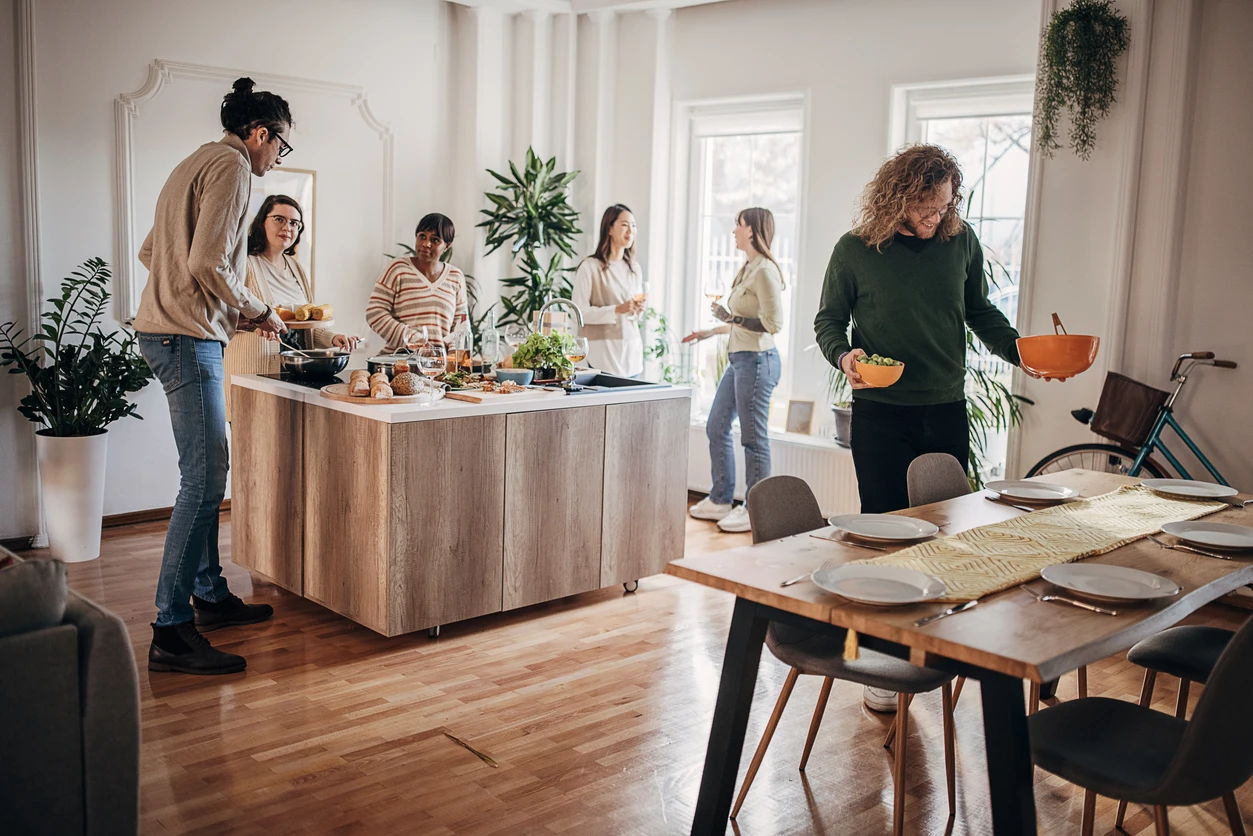
A well-designed co-living space doesn’t need signs that say “communal.” It communicates through flow. A kitchen slightly open to the living area invites a passing comment that becomes a real conversation. A shared entryway with room to pause can create five seconds of eye contact that turn into familiarity. A dining table visible from the hallway reminds people that this is a place to gather, not just pass through.
The small, almost invisible details make the biggest difference. The placement of a window can affect how comfortable someone feels lingering in a shared lounge. The width of a corridor can determine whether people walk past each other in silence or stop for a quick chat. Even lighting can shift the mood from bright and transactional to soft and welcoming.
Design can do what community managers cannot: create conditions that make interaction feel natural rather than forced. That’s not about adding more amenities or bold architectural statements. It’s about making the spaces between rooms intentional. The movement from one place to another should feel almost subconscious, but it’s in those transitions that relationships begin.
Every co-living project tells a story about how people live together. Some tell a story of separation, individual studios stacked side by side, each door a quiet boundary. Others tell a story of overlap and encounter, where shared kitchens, terraces, and lounges become natural stages for daily connection. Neither approach is right or wrong, but they lead to very different experiences.
In a world that talks endlessly about “community,” the architecture of co-living is still catching up. Too many developments use the word as decoration, without rethinking the physical systems that support it. True community isn’t built by slogans or events calendars. It’s built by how the walls are placed, how sound travels, and how light moves through a space.
It starts with a quiet shift in thinking. From fitting people into a space to shaping a space around how people meet, move, and belong. From designing efficiency to designing encounter.
This doesn’t require massive budgets or complex technology. It requires empathy. The ability to imagine what it feels like to come home after a long day and pass through a space that either drains you or welcomes you. The ability to think like a resident, not just an architect.
The best co-living spaces have an ease to them. They make connection effortless. You don’t need to schedule it or enforce it, it just happens. Someone offers you a cup of tea while you’re making dinner. You overhear a laugh from the next room and join in. Slowly, those moments form a pattern, and the building becomes what it was always meant to be: a living organism that supports human connection.
That kind of design doesn’t shout. But when it’s done well, you can feel it.